Thursday, November 15, 2012

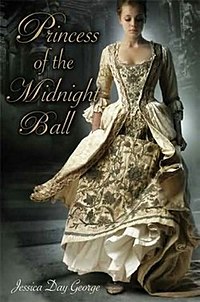
Princess of the Midnight Ball by Jessica Day George


Genre: Fantasy
Rating: *****
Pages: 280
Series: One companion novel, Princess of Glass, with a third, Princess of the Silver Wood, on the way.
When the kingdom of Westfalin finally declares victory on Analousia after twelve years of war, Galen has no home to return to. Luckily, the eighteen year old soldier is able to find work with his irritable uncle, keeper of the Queen's Garden. He soon falls in love with King Gregor's eldest daughter. But Rose and her eleven sisters are cursed. Every third night, the princesses disappear and wear out holes in their dancing slippers. None of the princes King Gregor recruits can solve the mystery.
Can a lowly under-gardener triumph where so many princes have failed? Galen is prepared to find out, armed with nothing more than his soldier's stamina and true love. Well, that and an invisibility cloak, herbs to ward of evil, his trusty knitting needles, two pistols, a rifle, and a penknife. Soldiers are supposed to carry weapons, after all. But let's just leave off at true love.
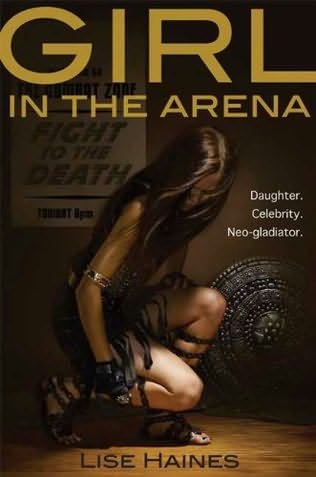
This is my third reading and I still can't figure out why it's so good. I think it must be Galen. Don't let the title and Ballgown Babe fool you. This isn't a girly book. It's told from both Rose and Galen's perspectives but focuses mostly on him. I love Galen. He's a respectful soldier boy when he needs to be, stands his ground when it's important to him, and turns into a cocky flirt whenever it suits him.
Princess of the Midnight Ball is an action packed, addicting read.

Saturday, October 13, 2012

Book Talk: A Word to YA Authors

All YA authors tour schools at some time. Many of them are former teachers. So why do they never understand how schools work?

1: Blackbords
I've never known a teenager who goes to a school that has them. We have whiteboards now, and sometimes SMART boards. Those are going to gain popularity in years to come.
2: Popularity ladder
Schools contain hundreds, some thousands, of students. Do you really think we'd take the time to rank every last soul by popularity? There's your friends, the people you know, and then everybody you don't know. Some people are more well known than others. Mostly for being stupid. Nobody memorizes the names, faces, and reputations of the entire varsity football team for the sole purpose of whispering about them. You're not going to track everybody by where they sit at lunch. You're too busy eating and talking to your own friends. Which brings me to our next item.
3. Cafeterias
Lunchrooms are big. And loud. Sometimes you have to ask a friend sitting next to you to repeat what they just said. So naturally enough, you won't be able to hear an anouncement over the intercom. You won't see somebody trip halfway across the cafeteria. And depending on the size of your school, you won't be able to sit alone at a table. You couldn't at my elementary or middle school, but my high school has more space because it lets people eat outside or in the halls.
My elementary school had twenty tables in two straight rows. Stand in the middle and you can see anything that goes on. There was an end of school food fight every year. I never saw it. Everything fifteen feet away goes unnoticed.
4: Characters dramatically switching seats after a dramatic breakup
Some teachers let you choose where you sit, but even they won't let you trade haflway through the quarter. Usually you get alphabetical seating at the beginning of the term and a more randomized seating chart once they've realized who's going to be their problem student.
Attention...students, I have a...very shrill announcement...to deliver...
5: P.A. systems
What does that even stand for, principal audio? I've always called it an intercom.
6: School nurses
Schools don't have their own anymore. Most nurses travel around between dozens of schools. When you get sick, it's the attendance office lady who opens the door for you and tells you to lie down.
7: Clever abbreviatons
Perhaps some people refer to their cafeterias as "the caf" and classes as "bio" or "chem". But to the rest of us, it just looks weird. English lit, home ec, gym when it was called lifetime fitness on your schedule, those are okay. But do yourself a favor and make it mainstream.
8. We're all sixteen going on seventeen
Except for the readers. I've been reading books about high school students since I was in third grade. Apparently ninth grade protagonists are only acceptable in boarding schools where they're not quite the youngest. Sixteen is the golden age. It's when you discover you're descended from a line of magicians and inherit your powers. It's the year the monsters realize you are the Chosen One and hunt you down. It's the year the prophecy must be fulfilled. It's the year you obtain a driver's license, so the setting isn't limited to the walking distance of Freshman Fred's stubby legs.
All the little people can read up. Unless they're content with the books featuring protagonists their age. Namely stupid middle school clique novels and fantasy where fifteen year olds don't need to be in school. Really, that's all there is. If they start out fifteen, they have a birthday by the end.

9. Miss Wilma Wallflower
She lurks on the outskirts of the aforementioned cafeteria, hiding behind her book, glasses, and long, dark hair. An outsider among blondies doting on lip gloss and boys. All the others find it strange that she reads and pulls straight A's. So she's supposed to be different.
But she isn't. She's a more common stock character than the blonde cheerleader. When female authors want to set a story in high school, they recall their own memories of teenage life, and this is what they get. But wait, there's more!
Despite his status as school quarterback and the personal harem clinging to him as he glides from one class to another, Dreamboy wants her. Because she doesn't want him. Because she doesn't wear makeup. Because she's intelligent. Bonus points if he's a senior and she's merely sixteen (see above). Wish fulfillment, anybody?
Oh, and intelligence? It's not that rare a quality in teenagers. But nobody gets straight A's unless they spend every single waking hour outside of school on homework. Minimal sleeping. No hobbies. No friends. Have fun writing a novel about Wilma spending a year in front of a computer screen maintaing her perfect report card.
Really, can't she settle for being an honor student? There's nothing wrong with a 3.0. How does the entire student body know her GPA anyways?
10. Mrs. McTeacher
From kindergarten to tenth grade, I have had...let's see...twenty-seven female teachers. Ms. Darger became Mrs. Johnson halfway through the year. Mrs. Mackerell had us call her just that. My Spanish teacher, Ms. Denney, encouraged us to call her Senora. Ms. Von der lohe taught theater and appreciated the title 'Queen V'.  All the rest had Ms. in front of their names. Even if they were old. Even if they were visibly pregnant for much of the year. Even if they had children attending the school. Even if they taught home ec. That's just how teachers work in the early twenty-first century. Until seventh grade, I didn't even know Ms was supposed to have an air of unconventional feminism to it. I thought it was an abbreviation for Miss. In books, Mrs. McTeachers strike me as weird unless they're supposed to be motherly, or grandmotherly, or evil teachers pretending to be caring for appearance's sake.

That's school as I know it. Time to break the tropes.

Monday, August 27, 2012

Book Talk: Copycats

Sometimes I pick up a book and feel like I'm reading the same story time and time again. Sure, authors can't be original all the time, but I'm starting to wonder if originality even exists.
1. Mimic
This is the cheapest form of copycatting. You see that somebody's gotten rich off a certain series, leaving fans frantically searching for anything that remotely resembles it. So you write something kind of sort of like that, but nobody likes it anywhere near as much as the original series. 
Examples: This happened with Harry Potter and Twilight. Now it's happening with Hunger Games. Suzanne Collins is trickier to copy. You can put wizards or vampires in any story. But  you can't just put twenty four teenagers in an arena to fight the death. Dystopias require a lot more world building. Most of the Hunger Games 'knock-offs' have little in common except the genre.
 A bad (less original) dystopia will have only an evil dictator, a conspiracy where the government harms its own citizens, shortages, environmental changes, slightly changed technology (often hovercrafts), and lots of capital letters. I've seen Society, Authorities, Officials, the Reestablishment, and The One or the Ones. Usually protagonist thinks their world is perfect until a lover/friend/mentor, most often a lover, teaches them to think differently.
A good dystopia willl create a remarkably different world and raise questions about human nature.
2. Glorified fanfic
 
Fan fiction is great fun, but not usually high quality. And it shouldn't be published. Internet is fine, it gives the fandom something else to drool over. But it shouldn't be wrapped in a book jacket and placed on shelves of Barnes and Noble. It's even worse than mimicry because they're copying characters and plots, not just concepts.
Examples: Everybody loves Pride and Prejudice. Especially the authors of Prada and Prejudice, Prom and Prejudice, and Pride and Popularity. I actually liked the first one, but I could tell Callie was supposed to be Elizabeth and Alex was supposed to be Mr. Darcy. 
I think what happens is somebody will read a book they really love and feel a strong desire to write one just as good. But what made it good is the originality-such a rare thing-so a copy will never never achieve the same quality.
3. Parody
 
So you hate a book and want to write the opposite. Many of history's great works were written this way.
Examples:
Jane Austen wasn't very impressed by gothic romance, which dominated women's fiction at the time. Northanger Abbey stars a clueless heroine who only thinks there are skeletons in the closet.
Cervantes hated knights in shining armor galloping across the countryside on noble steeds to save damsels from giants. So he had an insane old man in rusty armor riding ugly horses, wooing kitchen maids, and attacking windmills.
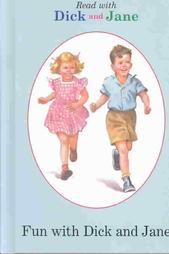
Dr. Suess hated the Dick and Jane books. He thought it was no wonder kids wouldn't want to read if all they could do was learn about Dick and Jane watching Spot run. His editor challenged him to write something children wouldn't want to put down using the same simple words.
After scanning a vocabulary list, Suess found two words he liked, 'Cat' and 'Hat', and worked from there.
4. Inspiration
 
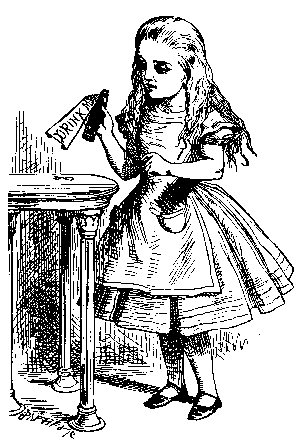
Everybody has to get their ideas from somewhere. Lewis Caroll got his while rowing down a river with three little girls, one of them named Alice Liddell. That trip inspired Wonderland. Wonderland inspired everything from books to songs to TV shows to plays. I'm not even going to count the movie adaptations and fan sequels.
1900: L. Frank Baum writes The Wonderful Wizard of Oz, where we have Dorothy instead of Alice, a tornado instead of a rabbit hole, and Oz instead of Wonderland.
1967: The Jefferson Airplane Song 'White Rabbit' consists of references to Alice in Wonderland and makes it sound like the book's about drugs. This is probably why people believe Caroll was high while he wrote it. You can't write a book while you're high. Songs, yes, but not a book.
One pill makes you larger
And one pill makes you small
And the ones that mother gives you
Don't do anything at all
Go ask Alice, when she's ten feet tall
1971: The diary format novel Go Ask Alice takes its title from the lyrics of White Rabbit.
1995: Gregory Maguire twists the story of Oz and writes Wicked: The Life and Times of the Wicked Witch of the West.
2003: A Broadway musical is based of Maguire's book.
Also 2003: New York City resident Suzanne Collins ponders on how you're so much more likely to fall down a manhole than a rabbit hole and writes 'Gregor the Overlander'.
2012: In the ABC drama Once Upon A Time, the Mad Hatter is named Jefferson after the band.
All this wouldn't have been if it weren't for Alice.
So I have to wonder, is anything original, or are people retelling the same stories over and over again?


Thursday, August 23, 2012

Night by Eile Wiesel


Nonfiction, memoir, Holocaust
Rating: *****
Series: First of a trilogy
Pages: 120. And that's counting the preface, introduction, and Noble Peace Prize acceptance speech at the end.
This is not the kind of book I usually read. But I had to for my English class. I put it off until the end of August because, well, it's a Holocaust book and I wanted to enjoy my summer. I checked it out from the library along with a load of fantasy, figuring I could focus on them and rush chapters of Night in between.
So there I was, eating lunch next to my stack of library books, when I decided I'd pick up Night and just read the first sentence. Because I like first sentences.
You know how you manually shovel popcorn into your mouth in an action packed movie? That's how I ate pasta while reading the first page. And that was just the preface.
Night tells the story of Eliezer Wiesel's time in concentration camps and the horrors he endured there.
Hmm. My summaries are usually longer. But really, that's all I can say. None of my own words could do justice to the crematoriums and starvation and horrible inhumanities.
What got me was the simplicity. Wiesel makes no attempt to dramatize anything. People he cares for die in a sentence. The camp is liberated in less than half a page. The words are all basic and understandable aside from a few German names and terms. Yet somehow, strung together, these words commanded a dark, eerie essence.
"The road was endless. To allow oneself to be carried by the mob, to be swept away by blind fate. When the SS were tired, they were replaced. But no one replaced us. Chilled to the bone, our throats parches, famished, out of breath, we pressed on.
We were the masters of nature, the masters of the world. We had transcended everything-death, fatigue, our natural needs. We were stronger than cold and hunger, stronger than the guns and the desire to die, doomed and rootless, nothing but numbers, we were the only men on earth."
-Page 87
Even the less eloquent parts pack raw power in the context.
We came to an abandoned village.
Nobody asked anyone for help. One died because one had to. No point in making trouble.
Our eyes searched the horizon for the barbed wire of Gleiwitz.
If you only read one Holocaust book, read this one.

Monday, July 30, 2012

UNWIND by Neal Shusterman


Genre: Dystopian, science fiction
Rating: *****
Pages: 335
Series: One companion short story available only as an ebook, one sequel scheduled for digital release in late August
Reaction: This was supposed to be my road trip book. But then I rushed through it all the day before.
Connor's been called troubled. Defiant. At risk. A problem child. Now his parent are having him unwound-taken apart piece by piece so his tissue and organs can be donated to someone else. Someone more deserving. And then they're going on a cruise to the Bahamas to celebrate.
Risa an orphan. A ward of the state. Unwanted. A burden. When she's unwound, the state home will recieve a sum of money they can use to provide happy, safe lives for all the other children.
Lev was slated for unwinding at birth because of his family's religion. That makes him special. A tithe. A donation. A gift to the world. He didn't used to mind.
The action kicks in when fate (well, a bus crash and a kidnapping) bring the three together. And from there, it. Does. Not. Stop.  In the moments where they're not on the run, they're hiding under trapdoors or packed into shipping crates. When the police aren't an immediate threat, there's always the risk of mutiny and betrayal. Usually from Lev, the little brat.
I love a good dystopian novel, but some of them are starting to seem the same. Evil dictator killing his own people, war against an unspecified enemy, extreme wealth and poverty, shortages, climate changes, and everything seemed so perfect until the love interest taught you to see otherwise.
UNWIND is everything a dystopian story should be. There's rebellion and plenty of action, and it also provokes questions about life, death, and human nature.
Most of the other reviews I've seen are by adults, parents and non-parents alike, who go on an on about how horrifying the premise is. They would never do that to their own children. No civilized person could. Or could they?
I could believe it. There are plenty of parents who murder their own children, both before and after birth. America aborts more babies each year than soldiers have died in every war combined.
But that's beside the point.
Neal Shusterman isn't the first to raise similar issues. Margaret Peterson Haddix's Shadow Children Sequence and Ender's Game by Orson Scott Card explore worlds dominated by a two children per family law. The Declaration by Gemma Malley takes place in a futuristic Britain where children are outlawed altogether. And then we're back to Suzanne Collins. Spoiler: People die in that book. Or did you know that already?
The world-building in UNWIND is slight. Newspapers are referred to as "retro", Connor describes iPods as "from his grandfather's time", but they still use cell phones. No futuristic technology beyond unwinding is mentioned.
There are a few social changes. Mothers can "stork" unwanted newborns, leave them on some random doorstep and the family is supposed to take them in. "Clappers" are suicide bombers who blow themselves up by-wait for it-clapping.
Political correctness has advanced. The new "appropriate" terms make me laugh everytime. There are no more black and white people, just "umber" and "sienna". Gays, mentioned about twice and appear very briefly without playing a particularly large role in the story, are  now "yin families".
Ah, euphemisms. Even unwinding isn't tehcnically called death. "100 percent of you will still be alive, just in a divided state." So stop complaining, kid.
UNWIND is told from three main perspectives-Connor, Risa, and Lev-with additional chapters narrated by walk-ons. Cops, teachers, and even a rioting mob. My favorite character is Cy-Ty. He's this umber guy who always speaks his mind, but there's a lot more to his mind than first meets the eye.
Of the main three, I liked Risa the best. She's strong. Not in that take-on-the-world-with-her-bare-fists way you're starting to see from more heroines. She just sticks up for herself and her friends whenever there's trouble. Both of the boys have terrific character arcs. Connor learns to contol himself. If I had to pick, I'd call him the main protagonist. But Lev, ooh Lev, he goes from being this whiny, pathetic, brainwashed tithe I wouldn't have minded seeing unwound too terribly to...you'll just have to wait and see.
Yes, there's bad guys and bad laws and bad things happening to good people. I wouldn't recommend this to anyone under thirteen. But if you get caught up on chalking up a list of everything appropriate and inappropriate, you'll miss the whole frecking point. Shusterman creates an issue and comes at it from every angle, every what-if. All the themes and intriguing characters and quote-worthy passages and metaphors and quick, well chosen words are bound together to form the best dystopian novel I've seen in a long time.
Now when does that sequel come out again? The ending's perfect, I could have gone without and been happy, but I still need to read it.

Monday, July 16, 2012

Book Talk: My Pet Peeves

1: Car crashes.
Sometimes characters just have to die. Often these are the parents who die before the story even starts, leaving the protagonist with a single parent or entirely orphaned. Am I the only one who thinks this is a lame and overused excuse? If you need to kill somebody, have them gunned down in an alley or eaten by a polar bear. My favorite orphan explanation comes from Alex and the Ironic Gentleman. Alex was raised by her uncle because her parents died while spelunking is Iceland.
I did read one book where both villains drove off after locking the protagonist in a burning building (she escaped) and crashed into a tree. Dues ex machina.
2. Clumsiness
So many characters describe themselves as clumsy, yet they only trip twice in the whole book. If they were truly clumsy, they'd stumble going down the stairs, fall into a car while opening it, and hit their heads on the wall waking up in the morning. Not just when there's a trapdoor that can only be seen with your face on the floor or a clue lying unnoticed in the carpet. Not just while they're being chased through a dark forest at the climax.
3. Love interests that are just there
Some stories just don't need lovers. They need friends to accompany the hero on adventures, mentors to help them along, and villains to get in the way. Sometimes they don't even associate with their object of interest, just watch them from afar, hold maybe two conversations, and kiss at the end. Because life works that way.
red and pink hearts
4. Love interests that are boring
So he's described as being cute. Terrific for you, but I can't see him. Furthermore, I can't see why you'd spend a great portion of the novel talking to him if he has no other attractive qualities. If I'm going to dive into romance, I have to fall in love with him, too. Have him quote poetry or rescue hamsters from a burning building.
5. Authors who don't know how schools work
Blackboards are gone, we use whiteboards. Schools don't have their own nurses anymore. And if something happens in a cafeteria, a couple breaking up or friends shouting at each other, nobody will notice. Not if they're more than two tables away. Unless your cafeteria is really small, like a private school. But in your average high school, nobody can keep track of who sits at what table or what might be going on over there. You can't always hear what a friend sitting right next to you is saying. My elementary school cafeteria had two rows of ten tables, one for the lower grades and one for the upper grades. Not terribly large. Every year there was an end of school food fight, and I never saw it.
Then there's the whole popularity concept. I've never seen a school where people actually trail the rich/blonde/snobby/cheerleader/stupid girl around the hallways. There's no popularity ladder. There's your friends, the people you know, and then the people you don't know. Some people have more friends than others, but most of us don't care enough to rank them by popularity.
Besides, I can't get excited about another book with a blonde cheerleader. They just change the names every time. If you use stereotypes, abuse them, like the cheerleading spies in The Squad: Perfect Cover.
6. Overly happy endings
If they all get back home safely, if the battle is won, if the guy gets the girl or vice versa, that's happy enough for me. They don't need to get extremely rich, gain magical powers, and reunite their hopelessly divided family. Life is good, but sometimes life can only be so good.

7. Villains who play with the hero
This is the one who cuts only one rope from the rope bridge, leaving the hero a route across the chasm. Or the one who installed a tracker in the hero's arm while they were knocked out at the beginning, but allowed them to run around the country for 300 pages before meeting them at their final destination.Or the one who watches the hero battle their way out of terrifying traps fit for the movies instead of just shooting them when they have the chance. Which brings me to my next problem.
8. Villain middlemen
This usually happens in mystery or action. Especially in the Alex Rider books. So they figure out who the bad guy is and it's not very hard to figure out. After all, he was hanging around the crime scene with a gun. But wait, gun guy was actually working for somebody else. So they investigate that somebody else and find them to be in partnership with Villain #3. But wait! #2 and #3 had their motives, yes, but they were actually being manipulated by the real bad guy. Villain #4 is the real mastermind here. He's incredibly smart, yet for some reason he finds in necessary to blow up a car, burn down a building, kill a few guards and pedestrians, start a power outage, send threatening notes, hack a computer, disguise his motives, and involve three other lackeys. All so he can kill one person.
Couldn't you just walk in there with a gun? You might have gotten away with it if you didn't overcomplicate everything.
9. Random gay guy
Not even the main character. This is usually the best friend left behind when the girl goes on an adventure. She may mention him twice or talk to him on the phone when she needs advice, but he's not even there. So why make him gay?
If it's because political correctness has become necessary for fiction, why do most books still have all white characters? The only black protagonists I can think of are in historical fiction, with the exception of Rick Riordan's Kane Chronicles and Heroes of Olympus.

Speaking of Rick Riordan, anybody else notice how diverse his characters have become lately? In Heroes of Olympus we meet Leo, who's Hispanic, Piper, half Cherokee, Hazel, African-American, and Frank, Chinese-Canadian. I think he's trying to appeal to a broader fan base.

10. The unconventional young lady
She might be a princess, she might simply be from a wealthy family. She has no interest in embroidery or dancing or boys, like all proper young ladies should. And she's supposed to be unique. Every single time.
She might have been daring in contrast to the books of a couple decades past, but now the rebel princess has become the norm. I'm surprised when they do actually enjoy embroidery, like Creel in The Dragon Slippers or Addie in The Two Princesses of Bamarre.
Thursday, July 12, 2012

Fairy Bad Day by Amanda Ashby

Fairy Bad DayFairy Bad Day
Genre: Fantasy
Rating: **
Pages: 336
Emma was born to kill dragons. After all, her mother was one of the world's greatest dragon slayers before she died. Instead, Burtonwood Academy assigns her to be the first fairy slayer in history. Why would anybody want to slay stupid creatures no taller than ten inches? They're harmless, even if they are obnoxious and sarcastic with no fashion sense whatsoever.
Her rightful position of dragon slayer is taken by Curtis Green. He may be cute, but he has three years less slaying experience than Emma.
As if things couldn't get any worse, a giantic killer fairy keeps appearing on campus. Emma's the only one who can see it and it's looking more and more like there's no way to kill the thing. But there may be a way to defeat it...but only with some help from Curtis.
I found the fairy slaying idea extremely original and the romance extremely predictable. A perfectly cute boy, a personal grudge against him, and they're forced to work together. That sounds slightly familiar. Let me guess, are they going to kiss on the last page?
And then there's the writing style. Lots of showing instead of telling. The characters speak in a very expository manner, summing up their actions in recent pages or recents chapters and describing things they already know about. Not to mention the overuse of italics whenever they're saying anything remotely important. Especially in the last line of paragraphs.
Towards the beginning, Emma annoyed me because all she ever did was complain to the principal. Complain about not slaying dragons.  Complain about Curtis. Complain about how he's not doing anything to stop the invisible fairy. Things get a lot better once she starts acting on her own.
Later on, there's this dramatic scene where somebody's about to have his throat slit, but there's plenty of time for questions and answers and planning and insults while Emma moves to stop him. Either that claw is moving really slowly, or Emma's supernatural slayer abilities have blessed her with the gift to talk and lightning speed and still be understood.
There are also a few mild but unexpected twists towards the end, adding a satisfying element of drama to the story, though nothing made my heart beat fast.  I do love it when a book can do that. Fairy Bad Day is a quick, light, enjoyable read, even if the title is slightly corny.